Speaker Event Number Two

Project 2 in-process photos
.jpg)
.jpg)
.jpg)
.jpg)
.jpg)
.jpg)
.jpg)
.jpg)
.jpg)
Final Images

"The Family Photo"
By Leslie Miller

"Jeremy"
By Leslie Miller
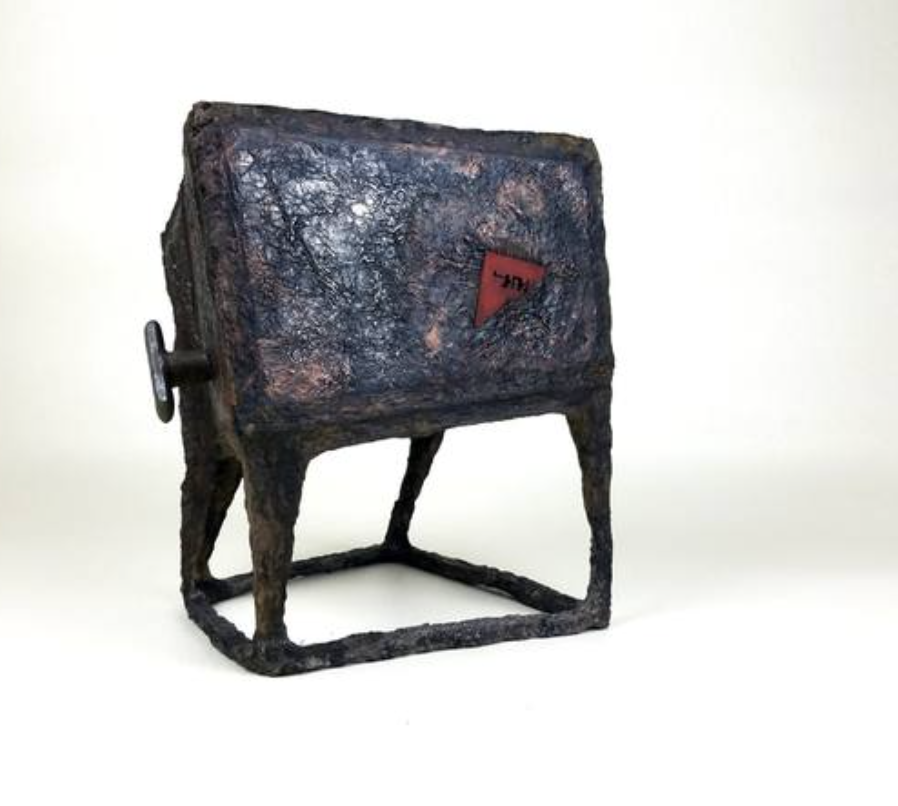
Height: 6" Width: 17" Depth 6"
%20copy.jpg)
"George"
By Leslie Miller
Height: 6" Width: 13" Depth 10"
%20copy.jpg)
By Leslie Miller
Height: 20" Width: 10" Depth 9"


https://www.kamelmennour.com/artist/tadashi-kawamata
https://terrykreiter.blogspot.com/2017/11/balsa-wood-and-japanese-tissue-new.html
Pia Mannikko, Artist
Reflection Statement
While exploring the materials, I wanted to focus more on the process while working instead of working towards one specific theme or concept. If I had done that, I would have blinded myself to other solutions to my project. I felt that the area I'm lacking in most is how I used the materials. I'm not saying that I did bad, but I feel as though I could push these to be more than they currently are. I would like to continue working with these materials, as this project was very educational and I feel as though I can enjoy and appreciate the process more thoroughly now and would like to learn more about what I could use these materials for. These pieces allowed me to really get hands-on and learn how to think for a three-dimensional work of art. I won't say that in doing this work that I learned a vital lesson on life and will or will not act on that lesson, because to be completely honest, the main thing this taught me is that I had to think a bit differently than my normal ways.


Castillo
De San Marco
St.
Augustine, established in 1565, faced numerous challenges in its early years,
including poverty and pirate attacks, notably the 1668 raid by English pirates
led by Robert Searle. This attack highlighted the need for better defenses,
prompting Spanish officials to send reinforcements and funds. Governor Don
Manuel de Cendoya initiated the construction of a stronger fort in 1671, but
both he and engineer Ignacio Daza died shortly after the project began.
Over the
next 23 years, various governors dealt with financial issues, disease, and food
shortages, delaying the fort's completion, known as the Castillo, until August
1695 under Laureano de Torres y Ayala. The budget increased significantly from
its original estimate. Native tribes, including the Guale, Timucua, and
Apalache, performed most of the work on the construction, often facing
mistreatment and harsh conditions. They were compensated minimally for their
labor, and European diseases severely impacted their population. The survivors
eventually contributed to the formation of the Seminole tribe, blending their
culture with that of the Spanish.
It has very sharp corners that caught my eye. I also noticed that the walls themselves were very square with one another and that the whole building was composed mostly of squares.


Lightner
Museum
In 1885,
Flagler began constructing the Hotel Ponce de Leon in St. Augustine, marking
the start of his hotel-building efforts. He went on to establish several other
luxury hotels in Florida, including the Breakers in Palm Beach and the Royal
Palm Hotel in Miami, all supported by his Florida East Coast Railroad.
The Hotel
Alcazar, Flagler's second resort in St. Augustine, opened in 1888. Originally
meant to be an annex to the Ponce de Leon, it became an independent hotel.
Designed by Carrère and Hastings, the Alcazar was one of the first large
multi-story concrete buildings in the U.S. Its structure featured ornate
terracotta designs, twin towers, and expansive windows. The hotel was divided
into three sections: the hotel rooms, baths, and casino. The baths provided a
space for relaxation, while the casino offered additional recreational
activities such as an indoor pool, ballroom, and bowling alley. The hotel also
included croquet lawns and tennis courts for outdoor recreation. However, as the 20th century unfolded,
changing tastes and the economic downturn following the 1929 crash led to a
decline in visitors, causing the Alcazar to close as a hotel in 1931.
My attention was mainly drawn to the long rectangular pillars at the front of the building as well as the patterns of the windows and arches beside them.


Memorial
Presbyterian Church
Memorial
Presbyterian Church in St. Augustine was Florida's first Presbyterian
congregation, established in June 1824 by Reverend Dr. William McWhir and
fourteen founding members. The church building, completed in 1889 and dedicated
in March 1890, was created as a tribute to Henry Flagler's daughter, Jennie
Louise, and reflects Flagler's faith and vision. The church is renowned for its
architectural style, inspired by St. Mark's Basilica in Venice, and is listed
on the National Register of Historic Places.
There are many details on this building though I was drawn to the dome at the top, the shape of what might be the main part of the building I also noticed that there are a lot of arches on the building.


Ancient
City Baptist Church
The
Ancient City Baptist Church in St. Augustine was established on January 20,
1887, by 18 Baptists who initially met in an opera house on St. George Street.
Created to serve the expanding Baptist community, the church has been an
important part of the city's religious life since its inception. Completed on
February 2, 1896, it holds the distinction of being the first permanent Baptist
church between Jacksonville and Key West. Throughout its history, the church
has been vital in providing worship, fellowship, and outreach to the community.
Unlike many others in the area I saw, this building isn't covered in intricate details but rather a lake of such and is made predominately with squares with only around two circular areas on it my main attention was on the windows and how many there were.
Idea #1
.jpg)
.jpg)
.jpg)
.jpg)


Castillo De San Marco
St. Augustine, established in 1565, faced numerous challenges in its early years, including poverty and pirate attacks, notably the 1668 raid by English pirates led by Robert Searle. This attack highlighted the need for better defenses, prompting Spanish officials to send reinforcements and funds. Governor Don Manuel de Cendoya initiated the construction of a stronger fort in 1671, but both he and engineer Ignacio Daza died shortly after the project began.
Over the next 23 years, various governors dealt with financial issues, disease, and food shortages, delaying the fort's completion, known as the Castillo, until August 1695 under Laureano de Torres y Ayala. The budget increased significantly from its original estimate. Native tribes, including the Guale, Timucua, and Apalache, performed most of the work on the construction, often facing mistreatment and harsh conditions. They were compensated minimally for their labor, and European diseases severely impacted their population. The survivors eventually contributed to the formation of the Seminole tribe, blending their culture with that of the Spanish.
It has very sharp corners that caught my eye. I also noticed that the walls themselves were very square with one another and that the whole building was composed mostly of squares.
Ancient City Baptist Church
The Ancient City Baptist Church in St. Augustine was established on January 20, 1887, by 18 Baptists who initially met in an opera house on St. George Street. Created to serve the expanding Baptist community, the church has been an important part of the city's religious life since its inception. Completed on February 2, 1896, it holds the distinction of being the first permanent Baptist church between Jacksonville and Key West. Throughout its history, the church has been vital in providing worship, fellowship, and outreach to the community.
Unlike many others in the area I saw, this building isn't covered in intricate details but rather a lake of such and is made predominately with squares with only around two circular areas on it my main attention was on the windows and how many there were.


Lightner Museum
In 1885, Flagler began constructing the Hotel Ponce de Leon in St. Augustine, marking the start of his hotel-building efforts. He went on to establish several other luxury hotels in Florida, including the Breakers in Palm Beach and the Royal Palm Hotel in Miami, all supported by his Florida East Coast Railroad.
The Hotel Alcazar, Flagler's second resort in St. Augustine, opened in 1888. Originally meant to be an annex to the Ponce de Leon, it became an independent hotel. Designed by Carrère and Hastings, the Alcazar was one of the first large multi-story concrete buildings in the U.S. Its structure featured ornate terracotta designs, twin towers, and expansive windows. The hotel was divided into three sections: the hotel rooms, baths, and casino. The baths provided a space for relaxation, while the casino offered additional recreational activities such as an indoor pool, ballroom, and bowling alley. The hotel also included croquet lawns and tennis courts for outdoor recreation. However, as the 20th century unfolded, changing tastes and the economic downturn following the 1929 crash led to a decline in visitors, causing the Alcazar to close as a hotel in 1931.
My attention was mainly drawn to the long rectangular pillars at the front of the building as well as the patterns of the windows and arches beside them.
Memorial Presbyterian Church
Memorial Presbyterian Church in St. Augustine was Florida's first Presbyterian congregation, established in June 1824 by Reverend Dr. William McWhir and fourteen founding members. The church building, completed in 1889 and dedicated in March 1890, was created as a tribute to Henry Flagler's daughter, Jennie Louise, and reflects Flagler's faith and vision. The church is renowned for its architectural style, inspired by St. Mark's Basilica in Venice and is listed on the National Register of Historic Places.
There are many details on this building, though I was drawn to the dome at the top, the shape of what might be the main part of the building and I also noticed that there are a lot of arches on the building.
Movie 1: How to Train Your Dragon Idea 1 Idea 2 Idea 3 Movie 2: White Fang (the Movie Animated) Idea 1 Idea 2 Idea 3 Final Idea " Deca...
.jpg)
.jpg)
.jpg)